
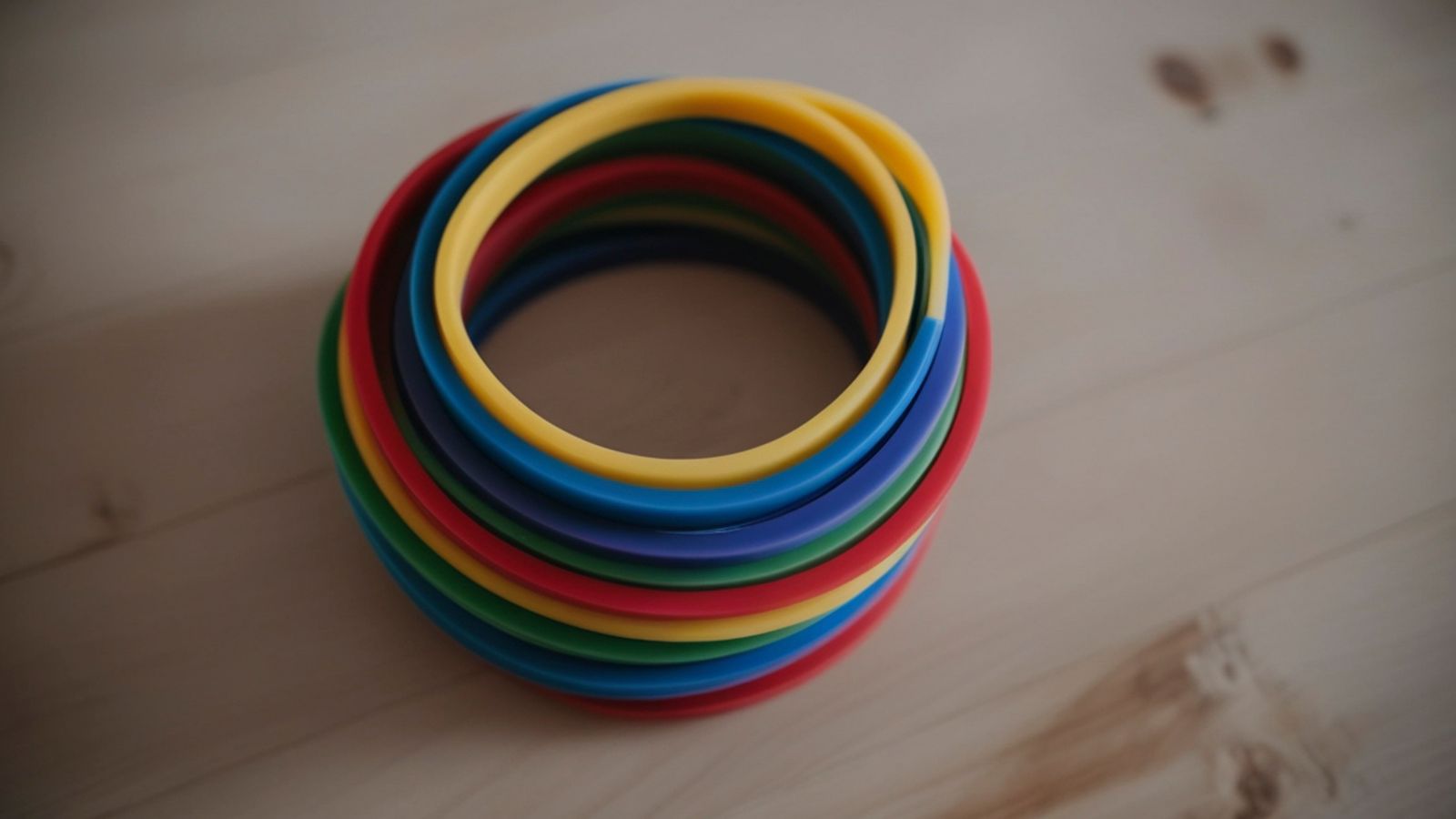
A rubber wristband is one of the few promotional items that works on multiple levels simultaneously — it’s an access tool, a fundraising product, a branding asset, and a keepsake, often all at once. That range of applications explains why the format has outlasted countless other merchandise trends and continues to show up at everything from charity runs to corporate conferences to multi-day music festivals.
The numbers behind the format’s cultural reach are striking. According to ESPN’s Lance Armstrong Foundation figures, the yellow Livestrong wristband generated $100 million from sales at just $1 each — and the foundation has raised over $470 million in total since its founding. That single campaign established a template that charities, schools, and brands have been drawing from ever since.
What Makes Silicone the Right Material
The term “rubber wristband” is widely used, but the material is almost always silicone — a synthetic rubber derived from silica rather than natural latex. The distinction matters practically. Silicone is hypoallergenic, fully waterproof, and durable enough to withstand months of daily wear without softening, discolouring, or losing its shape. A band survives the beach, a workout, the shower, and a late night out without any degradation.
That physical resilience is what separates silicone wristbands from paper or fabric alternatives for extended-wear applications. Tyvek paper bands are excellent for single-day events where tamper-evidence is the priority. Silicone bands are the right call when guests, supporters, or customers will be wearing the band for multiple days, or when the band needs to function as a keepsake after the event has ended.
Silicone’s elasticity also means a standard adult size accommodates a wide range of wrists comfortably. There’s no rigid edge pressing against the skin, no fraying at the closure, and no loosening over time. For events or campaigns where participants are wearing the band for hours, that comfort profile matters more than it might initially seem.
Customisation Methods and What Each Produces
The technique used to customise a band determines both its visual quality and how well the design holds up over time. The main options are:
- Debossed — text or logo pressed into the silicone, creating a recessed imprint; clean, classic, and highly wear-resistant
- Embossed — the design raises above the surface for a tactile, prominent effect
- Deboss colour-fill — debossed areas filled with contrasting ink; bold, high-contrast, and cost-effective
- Printed — full-colour designs applied to the surface; best for detailed artwork
- Dual-layer — two silicone colours moulded together, producing contrast built into the material itself
For most awareness campaigns and events, debossed or colour-fill bands hit the right balance of visual impact and durability. Dual-layer bands suit premium events or flagship campaigns where the wristband itself is a significant part of the experience.
Rubber Wristbands for Awareness Campaigns
The awareness campaign is where rubber wristbands have their strongest cultural track record. What made the Livestrong band so effective wasn’t the material — it was the mechanics. A $1 item worn on the wrist generates visibility with every interaction the wearer has throughout their day. No poster, flyer, or digital ad replicates that passive, continuous exposure.
As the Livestrong Foundation’s history on Wikipedia documents, the campaign triggered a wave of cause-based wristband programmes across charities worldwide. Pink bands for breast cancer awareness, green for mental health, red for HIV/AIDS — the colour-cause associations that followed became a shared cultural shorthand that extended every campaign’s reach without additional spend.
The economics reinforce the format’s appeal. Ordering 500 silicone bands at approximately $0.55 each totals a $275 outlay. Selling at $3 each means break-even after just 92 sales; at $5 each, just 55 sales cover costs. For schools, community groups, and non-profits working with modest budgets, that margin structure makes wristbands one of the most financially efficient fundraising products available.
Colour Associations That Extend Campaign Reach
Certain colours have become strongly linked to specific causes through years of consistent use:
| Colour | Associated Cause |
| Yellow | Cancer awareness and Livestrong support |
| Pink | Breast cancer awareness |
| Green | Mental health and environmental causes |
| Red | HIV/AIDS awareness and heart health |
| Purple | Domestic violence and epilepsy awareness |
| Blue | Autism awareness and child abuse prevention |
Aligning with an established colour association strengthens recognition without additional explanation. That said, a custom-printed band with the campaign name and message removes all ambiguity — the wristband communicates the cause directly, regardless of whether the audience knows the colour code.
Coloured Rubber Wristbands for Event Access Control
Away from campaigns, coloured rubber wristbands handle a distinct operational function at events: tiered access management. The durability that makes silicone ideal for extended daily wear makes it equally suited to multi-day festivals, outdoor events, and any gathering where a wristband must hold up through variable weather and physical activity.
Event organisers sourcing rubber wristbands in multiple colours for tiered systems gain a crowd management tool that requires no technology to operate. Bar staff, security, and volunteers can all make access decisions on visual information alone — no list checks, no radio calls, no repeated ID verifications at each checkpoint.
That operational simplicity compounds across a full event day. When a bar staff member can confirm age from three metres away, and a security guard clears a VIP zone entry in under a second, the cumulative effect is noticeably shorter queues and a smoother guest experience overall.
Promotional and Corporate Applications
The promotional case for rubber wristbands is quieter than the charity case but equally well-supported by data. According to the Advertising Specialty Institute’s Ad Impressions Study, brand recall is highest for wearable items, with 85% of recipients remembering the advertiser — a recall rate that outperforms radio, television, and digital advertising.
A wristband that fits comfortably gets worn, and worn items generate impressions with every person the wearer encounters. Unlike a branded pen left on a desk or a tote bag stored in a cupboard, a silicone band on someone’s wrist is publicly visible in every setting they enter. That passive, continuous visibility is the core of its promotional value.
The most effective applications include:
- Corporate team-building events — a shared band creates visual unity and doubles as a keepsake
- Trade shows and conferences — branded bands worn beyond the event keep the brand visible in professional settings
- Sports teams and school carnivals — selling bands builds community identity while generating funds
- Product launches — a custom band tied to a campaign theme gives attendees something tangible to take away
- Sponsor activations — a sponsor’s colour or logo at a festival reaches every person who sees the wearer throughout the event
The design decisions that determine effectiveness are straightforward. A band with too much text becomes illegible at wrist width. Poor colour contrast loses impact under variable lighting. The strongest promotional bands carry one clear message — a brand name, a slogan, a date — in a high-contrast combination that reads at a glance from across a room.
Practical Considerations Before Ordering
A few ordering decisions shape whether the bands perform as intended on the day.
- Size is the first consideration. Standard adult sizing accommodates most wrists, but events with mixed age groups should include a youth size run alongside the adult order. A band that slips off a child’s wrist doesn’t serve its access control purpose.
- Lead times vary by order type. Stock silicone bands in standard colours often ship within a few business days. Custom debossed, colour-fill, or dual-layer orders typically require ten to fifteen business days, depending on complexity and volume — a window that needs to be factored into event planning timelines well in advance.
- Order buffers matter. Most experienced event managers order 10–15% above expected headcount to account for spoilage, last-minute additions, and staff allocation. Running short mid-event and improvising with alternatives undermines any tiered access system already in place.
A Product That Outlasts Its Occasion
The longevity of rubber wristbands as a format is not accidental. They cost little enough to order at scale, hold up through months of wear, and generate ongoing visibility for whatever cause or brand they carry. A well-made silicone band doesn’t disappear into a drawer — it stays on the wrist, visible in every interaction the wearer has, long after the event or campaign has concluded.

Bob Duncan is the lead writer and partner on ConversationsWithBianca.com. A passionate parent, he’s always excited to dive into the conversation about anything from parenting, food & drink, travel, to gifts & more!