
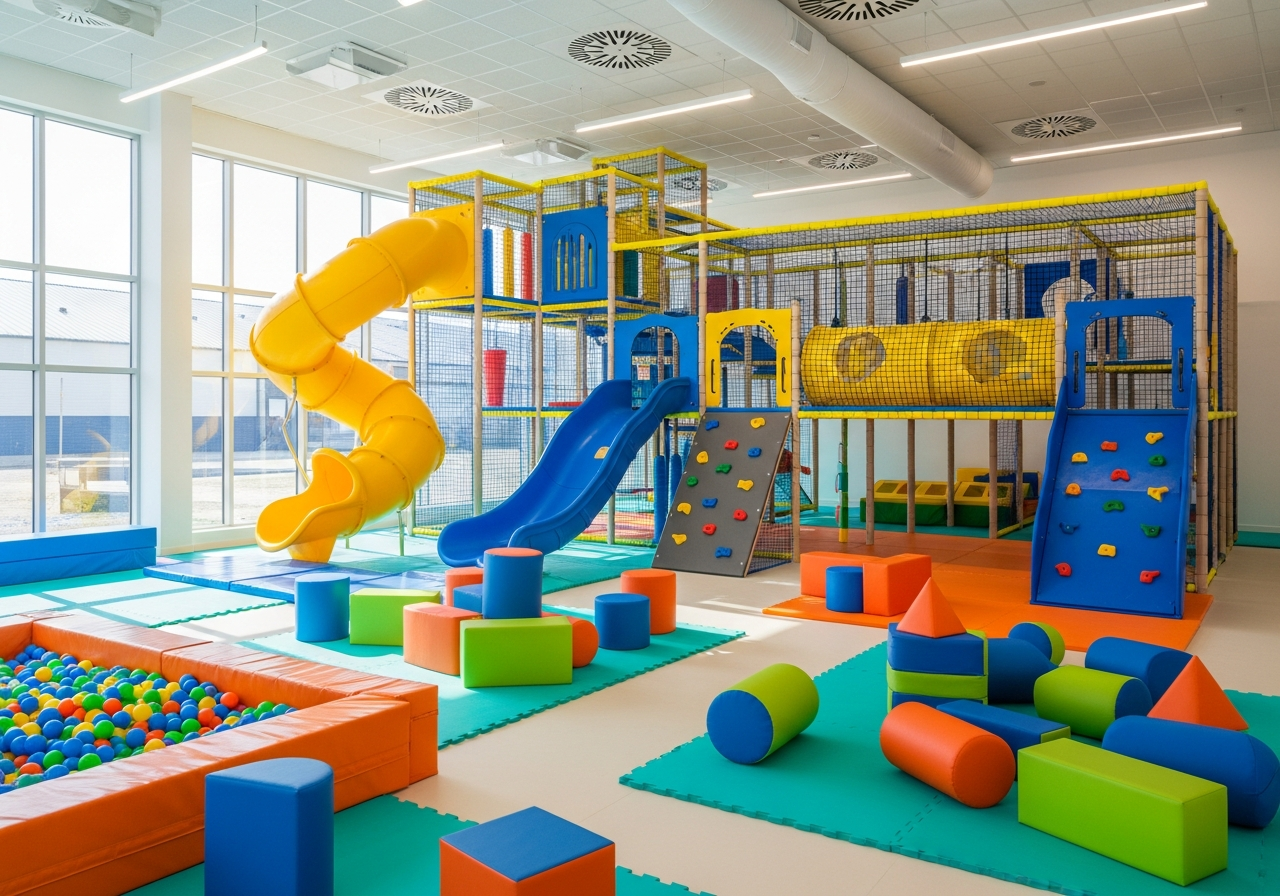
Step outside in a desert valley during summer, and the air hits you like opening an oven door. For families with young children, months of triple-digit temperatures create a genuine dilemma: how do you keep kids active, stimulated, and safe when outdoor play becomes a health hazard? Indoor adventures have emerged as both a practical and enriching answer. Climate-controlled play spaces give children the physical freedom and imaginative stimulation they need, entirely sheltered from the punishing heat outside. Indoor play spaces provide essential relief from the heat while simultaneously fostering physical development, creativity, and family connection.
When the Heat Won’t Let Up
Why Desert Valleys Need Indoor Escapes
Desert valley temperatures routinely climb past 100°F (38°C) for stretches of several months at a time. The health consequences of outdoor exposure during these peaks are serious. The CDC identifies dehydration, heat exhaustion, and heatstroke as real risks for children, whose bodies regulate temperature far less efficiently than adults. UV radiation at desert latitudes compounds those dangers further.
This reality has quietly reshaped how families in arid Southwest communities approach recreation. The urban growth that swept across desert metros after 2000 brought a meaningful shift away from traditional outdoor parks and toward air-conditioned family entertainment centers. Indoor facilities typically maintain temperatures between 68–72°F (20–22°C)—a range the American Academy of Pediatrics considers optimal for active children’s play. Rather than surrendering to the heat, valley families have discovered that moving play indoors preserves both health and routine.
Essential Features of Top Indoor Playgrounds
Safety and Design Standards
Quality indoor play venues build their entire design philosophy around minimizing injury risk. Multi-level climbing structures, foam-padded flooring, and enclosed soft play zones form the physical backbone of any well-designed facility. Impact-absorbing materials—such as EVA foam rated for falls of 10 feet or more—significantly reduce injury severity. Reputable venues conduct regular inspections aligned with ASTM International safety standards. Age-appropriate zoning also matters: low-height toddler areas kept separate from more demanding adventure zones ensure that play challenges match each child’s developmental stage.
Variety of Play Experiences
The best spaces go well beyond climbing. Educational elements woven into physical play—sensory walls, building block stations, maze-style obstacle courses—support cognitive engagement alongside cardiovascular activity. Accessibility features, including wheelchair ramps and sensory-friendly programming hours, make these venues genuinely inclusive for neurodiverse children and their families.
Health and Developmental Benefits for Families
The case for structured indoor play extends well beyond heat avoidance. Sixty minutes of active play in a playground environment meets WHO guidelines for moderate physical activity in children, building motor skills, cardiovascular health, and coordination. Cognitively, navigating mazes and puzzles encourages problem-solving and reduces screen dependence. Socially, children develop empathy and cooperation through peer interaction in shared spaces. Research published in the Journal of Pediatrics indicates that consistent playground activity correlates with roughly 20% better sleep quality in children—a benefit most parents notice fairly quickly.
Nearby seating areas, café access, and Wi-Fi at many venues give caregivers the ability to stay attentive while also catching a much-needed breath.
Integrating Indoor Play into Desert Family Routines
During the peak heat months of June through September, indoor play sessions work well as a midday cool-down anchor, later paired with short evening walks once temperatures finally drop. Membership programs and group admission rates at many venues make regular visits financially manageable for most families. A practical routine might combine weekly indoor play sessions with library story times or backyard picnics on cooler evenings.
Pro tip: Pack reusable water bottles and a light sweatshirt. Moving from desert heat into strong air conditioning can feel surprisingly chilly, especially for younger children.
Spotlight on Valley Indoor Play Options
The broader desert valley region has seen notable growth in family entertainment centers, driven by population expansion and increasing demand for year-round indoor recreation. For families exploring their local options, venues like the indoor playground glendale represent the kind of versatile, expansive space—with themed zones, structured play areas, and family-friendly amenities—that fits naturally into a desert lifestyle. When evaluating any facility, consider size, thematic variety, and typical crowd levels. Local parent forums and family apps often provide real-time capacity updates, helping you plan visits during off-peak windows.
Making the Most of Your Indoor Adventure
A little preparation can transform a good visit into a great one. Before heading out, check height and age restrictions online. Wear grip socks—many venues require them, and they genuinely reduce slipping on climbing structures. Aim to arrive outside peak hours; weekend midmornings between 11 AM and 3 PM tend to draw the heaviest crowds.
It’s also worth noting that many modern indoor play venues are built with sustainability in mind, incorporating energy-efficient cooling systems and recycled construction materials consistent with EPA green building guidelines.
Reflecting on Cool Adventures Ahead
In a landscape defined by relentless sun, indoor playgrounds function as something more than a convenience—they become essential community infrastructure for healthy childhood development. They keep bodies moving, minds engaged, and families connected through the long, hot months that define desert living. Prioritizing regular indoor playdates isn’t just a heat-management strategy; it’s an investment in habits and memories that last well beyond any single summer.

Bob Duncan is the lead writer and partner on ConversationsWithBianca.com. A passionate parent, he’s always excited to dive into the conversation about anything from parenting, food & drink, travel, to gifts & more!