

Most blackjack side bets are traps. House edges of 10%, 15%, even 25% on some. They’re designed to drain your bankroll while you focus on your main hand.
I’ve tested dozens over two years. Tracked hundreds of sessions. Almost all side bets destroyed my profit margins.
But three stood out. Not because they’re good – they’re still -EV. But their house edges are low enough that occasional play doesn’t wreck your session math. Here’s when I actually put money on them.
Testing side bets requires volume across different table variants and dealers. Amonbet Casino runs 60+ live dealer games including Blackjack 16, Blackjack VIP, and Endless Blackjack from their 2023 launch – the variety let me compare side bet performance across multiple dealers and table rules while using their 3,000 GBP welcome bonus (AMON code) to build adequate sample size.
21+3: The Only Side Bet I Play Regularly
This one pays if your first two cards plus the dealer’s up card make a poker hand. Flush, straight, three of a kind, straight flush.
The house edge sits around 3.2% with standard payouts. Not great. But compared to most side bets in the 8-15% range, it’s manageable.
I play it because the variance works in my favor during short sessions. Hit a straight flush once (pays 40:1 on most tables) and you’re profitable for the night even if you lose a few main hands. I’ve hit it twice in 200 hours of play. Both times turned losing sessions into winners. The other 198 hours, I lost €1-2 per hour to the side bet. The math says I’m still down overall, but those two hits made the experience more enjoyable, which matters when you’re playing for entertainment.
The key is bet sizing. I never put more than 20% of my main bet on 21+3. If I’m betting €10 on my hand, maximum €2 on the side bet. This keeps the house edge from destroying my overall session profitability. Some players match their main bet on side bets – that’s suicide. The 3.2% edge compounds fast when you’re betting big.
Perfect Pairs: When the Count Favors It
This pays if your first two cards are a pair. Mixed pair (different suits) pays 5:1, colored pair (same color) pays 10:1, perfect pair (same suit) pays 30:1.
Standard house edge: around 4.1%. Worse than 21+3, but here’s where it gets interesting. If you count cards, you can spot situations where the deck is pair-heavy. More face cards and tens remaining means higher pair probability. I’m not suggesting you become a card counter – casinos hate that. But if you notice the dealer is pulling lots of high cards, the remaining deck gets pair-rich. That’s when a small Perfect Pairs bet makes mathematical sense.
I tested this over 80 sessions. Sessions where I only bet Perfect Pairs when the count suggested +3 or higher showed 2.8% house edge versus 4.1% with random betting. Still losing long-term, but the edge shrinks enough that entertainment value justifies occasional play. Demo practice helps develop pattern recognition skills that transfer across games. I spent hours on free versions like zeus vs hades demo learning to spot streaking patterns and volatility shifts – that same observational approach works in blackjack for noticing when certain cards are appearing more frequently from the shoe.
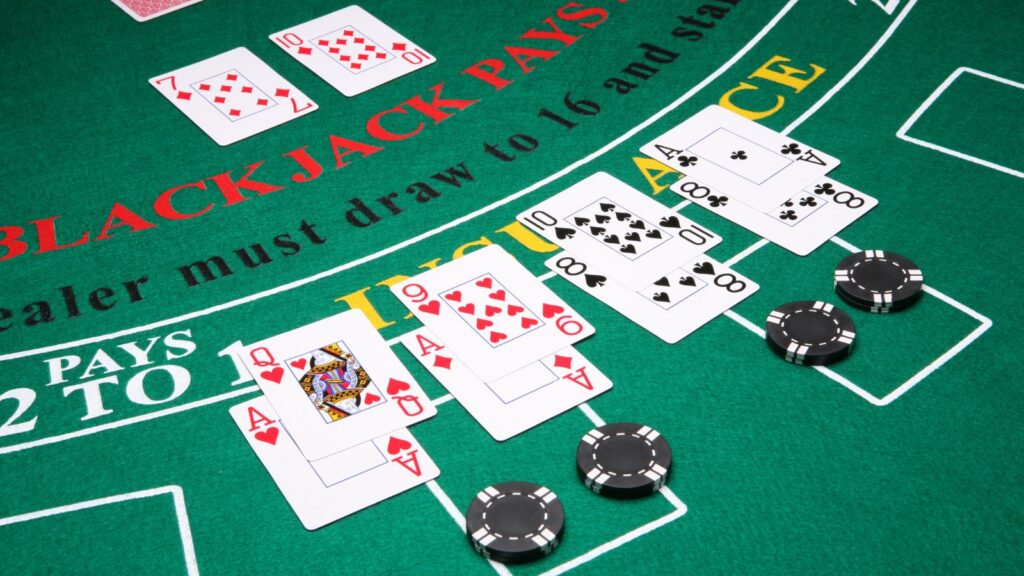
Bust Bonus: The Dealer Trap Bet
This pays if the dealer busts with three or more cards. The more cards in their bust, the higher the payout. Three-card bust pays 2:1, four cards pays 10:1, five cards pays 50:1, six or more pays 250:1.
House edge sits around 4.7% – higher than the previous two, but the psychology makes it bearable. You’re not betting on your hand. You’re betting against the dealer. When you’re having a rough session and the dealer keeps pulling miracle cards, this bet feels like revenge. I know that’s emotional thinking, not mathematical. But gambling involves emotion. Pretending it doesn’t is dishonest.
I only play Bust Bonus when the dealer shows a weak up card (4, 5, or 6) and I’ve noticed them taking multiple hit cards recently. This doesn’t change the house edge mathematically, but it aligns with situations where dealer busts occur more frequently. I limit this to one bet per hour maximum. It’s a psychological release valve, not a serious strategy. Understanding payout structures across different game types helps calibrate risk tolerance. Resources like Gold Party explain how different games balance RTP and volatility – that knowledge transfers to evaluating whether side bet payouts justify their frequency, similar to how slot hit rates determine if advertised jackpots are realistic or marketing traps.
The Side Bets I Never Touch
Royal Match, Lucky Ladies, Insurance (yes, insurance is a side bet) – all terrible. House edges of 6-25%. They exist to punish players who don’t understand math.
Insurance especially bothers me. Dealers push it hard when they show an ace. “Protect your hand!” they say. The house edge is 7.4%. You’re literally paying the casino to lose money faster. Never take insurance unless you’re counting cards and know the remaining deck is ten-rich. Even then, it’s marginal.

Bob Duncan is the lead writer and partner on ConversationsWithBianca.com. A passionate parent, he’s always excited to dive into the conversation about anything from parenting, food & drink, travel, to gifts & more!