
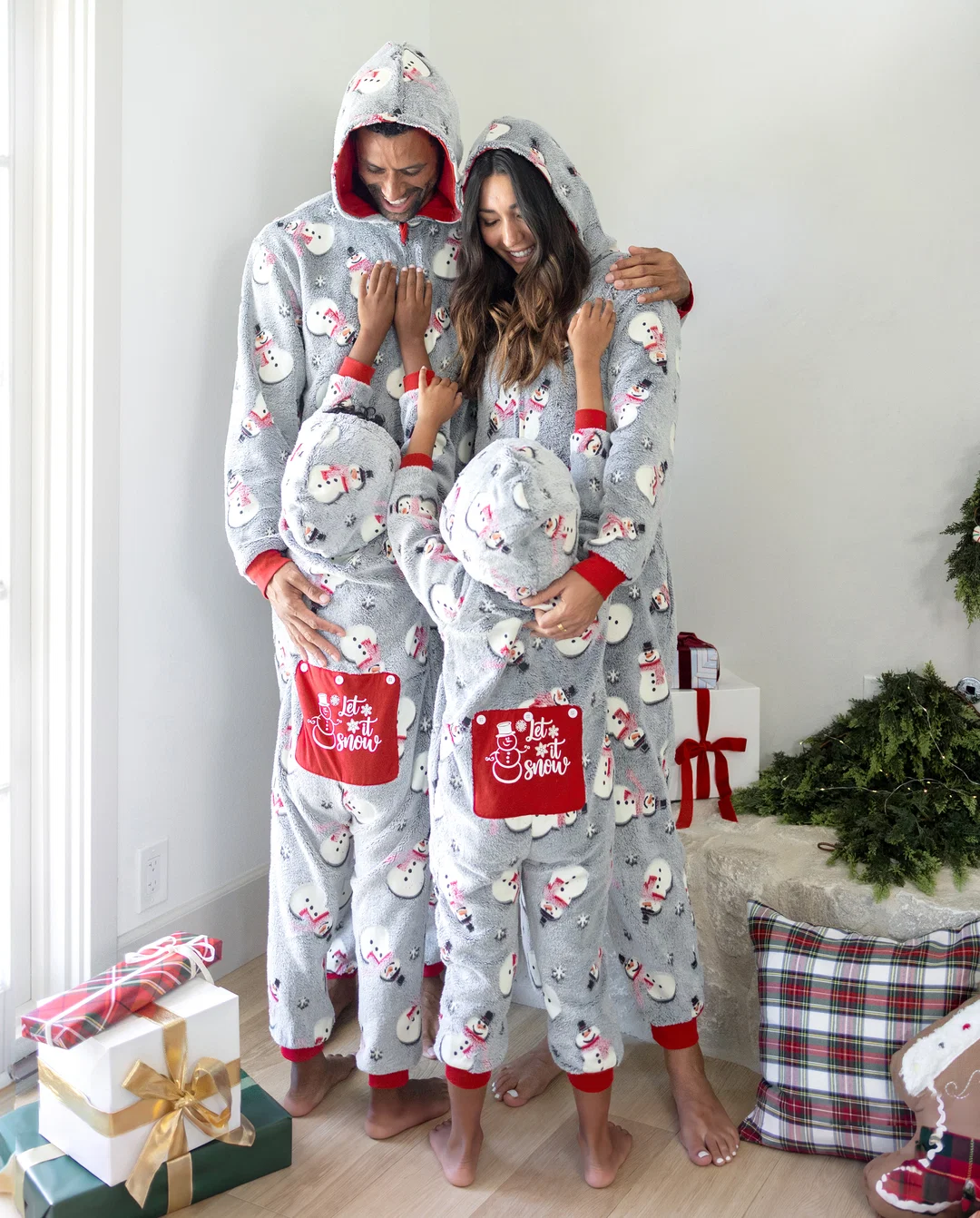
Divorce or separation rearranges almost everything about a family’s calendar, but it doesn’t have to touch the small rituals that make Christmas morning feel like Christmas morning. For kids splitting the holiday between two houses, consistency is often what matters more than location — the same songs, the same breakfast, the same photo taken by the tree. One of the easiest rituals to carry across both homes is christmas pajamas: a single, low-effort tradition that doesn’t depend on which parent’s house the holiday lands at this year.
Parents navigating co-parenting during the holidays often worry less about the big logistics — who has the kids on the 24th versus the 25th — and more about the emotional continuity underneath it. Kids notice when something feels different, and they especially notice when a beloved tradition quietly disappears. Pajamas are a strange but effective fix for this. They’re inexpensive, they photograph well, and because the same print can exist in two closets at once, a child never has to choose which house “owns” the tradition.
This isn’t about pretending nothing has changed. It’s about giving kids one steady thread to hold onto while everything else adjusts. A shared pajama tradition works precisely because it’s small enough to not require negotiation, but meaningful enough that kids remember it.
When Home Splits, One Ritual Doesn’t Have To
Family therapists who work with separated or divorced parents often point to the value of “anchor rituals” — small, repeatable traditions that don’t shift no matter which parent is hosting. Anchor rituals reduce anxiety around transitions because they give kids something predictable to expect, regardless of the bigger, harder-to-control changes happening around them. A shared holiday pajama tradition fits this role well because it asks almost nothing of either parent logistically. There’s no shared calendar to coordinate, no custody schedule to negotiate around — just a pattern the child recognizes and can count on.
The tradition also sidesteps one of the trickiest parts of co-parenting during holidays: the instinct to compete. When both households can independently keep the exact same print in rotation, neither parent has to feel like they’re “doing Christmas better.” The tradition belongs to the kid, not to either house.
Making a Tradition Portable Between Two Houses
The easiest way to keep a matching pajama ritual alive across two addresses is to treat it as something that exists in duplicate rather than something that travels back and forth in a bag. Buying the same print for both homes means nobody has to remember to pack pajamas on changeover day, and nobody has to explain why “our” pajamas are currently at Dad’s house when Christmas Eve is happening at Mom’s. Two sets, one print, zero friction.
This also solves the sizing problem that pops up every year regardless of family structure — kids grow fast, and last year’s pajamas rarely still fit by December. Re-buying annually already happens in most households, so building in a second, identical order for the other house adds very little extra effort. It just means placing the order once, in two sizes-worth if needed, rather than shuttling one set between addresses.
The Print That Becomes the Shorthand
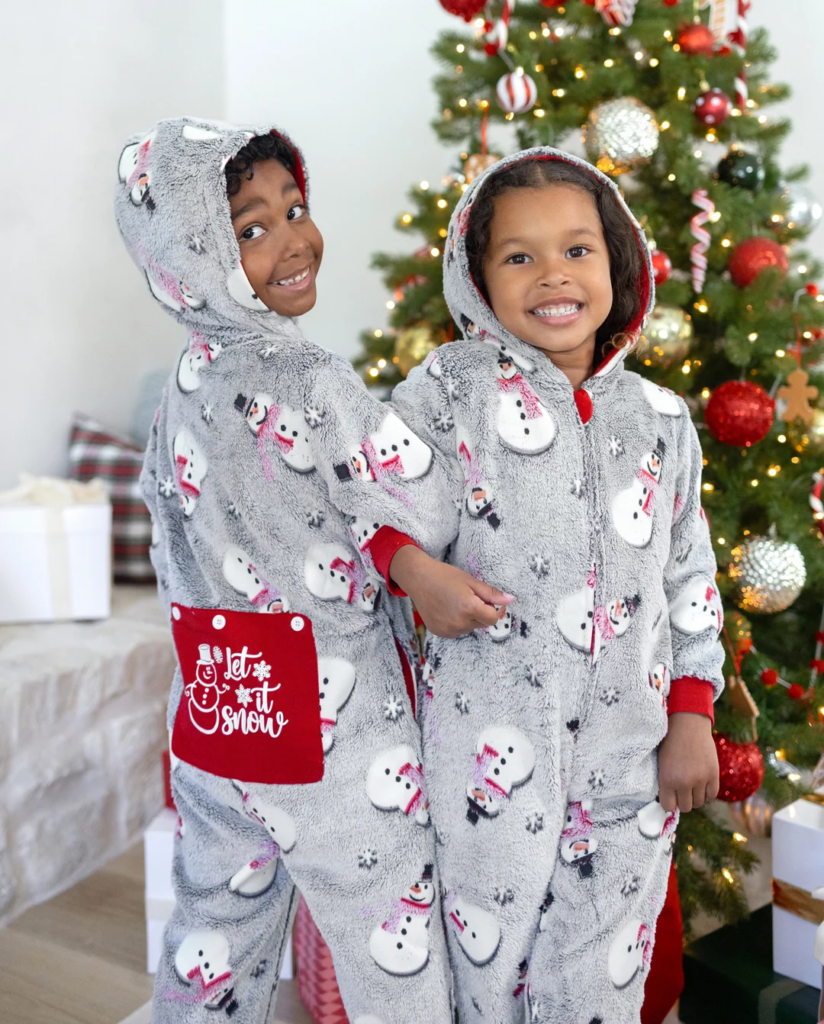
Some prints end up carrying more emotional weight than others simply because they become associated with a specific kind of memory — the ones kids ask for again the following year, the ones that show up in every photo without anyone planning it that way. The Christmas Matching Family Coral Fleece Pajamas Snowman Print Gray tends to fall into that category for a lot of families, mostly because of one small detail: the snowman print glows in the dark once the lights go out, which is exactly the kind of thing an eight-year-old will bring up at Thanksgiving the following year. It’s a one-piece hooded zip-up in soft coral fleece, sized across women’s, men’s, kids’, and baby ranges, with a matching pet size for families who want the dog in the photo too. Kids’ and baby sizes are made from flame-resistant fabric, and the tagless, flat-seam construction means there’s nothing scratchy working against actual sleep — which matters more than it sounds like it should when a child is overtired and overstimulated on Christmas Eve. For a two-household tradition, the appeal is straightforward: buy the identical set for both homes, and the surprise of the glow-in-the-dark print stays exactly the same no matter which house wakes up to it.
What Actually Travels Between the Two Houses
It’s worth being honest that not everything about a divided holiday can or should be duplicated. Gifts differ, decorations differ, even bedtime routines differ. Trying to make both houses identical usually backfires — kids can tell when something is being staged rather than lived. What works better is picking one or two very specific, very small things to keep constant, and letting everything else be allowed to look different. Pajamas work as one of those anchors precisely because they’re low-stakes enough that duplicating them doesn’t read as competitive parenting; it just reads as thoughtful.
Parents who’ve been through a few holiday seasons post-separation often mention that kids stop noticing the differences between houses once a few of these anchors are firmly in place. The tradition becomes bigger than either address — it becomes something the child owns, that exists independently of custody arrangements.
Something to Point At When Words Are Hard
Explaining a split holiday schedule to a young child is rarely easy, and abstract reassurances (“Christmas will still be special, I promise”) don’t always land the way parents hope. A physical, repeatable object does more of the reassuring work than a conversation can. When a child sees the same matching christmas pajamas come out of the closet at both houses, it becomes proof — not just a promise — that something familiar survived the change. Kids process transitions concretely before they process them emotionally, and a recognizable print handed to them on Christmas Eve, regardless of which parent is doing the handing, does a lot of quiet reassurance that words alone can’t.
This is also where matching extends usefully beyond just the child — siblings wearing the same print reinforces a sense of “we’re still one family unit” even when the household itself has split into two. And when parents themselves wear the matching print too, it removes any subtle signal that the tradition belongs to one house more than the other.
Sizing Two Households Without the Guesswork
Ordering for two homes at once is really just ordering for one family twice, which means the same sizing logic applies either way: check current measurements rather than relying on last year’s size, since growth spurts are unpredictable and coordinated family sets only look coordinated when everyone’s size is accurate. Most matching pajama sets run true to standard sizing, but a quick check against a size chart before ordering avoids the scramble of a same-week exchange during the busiest shipping weeks of the year. For families managing two orders, placing both at the same time also means both households end up with pajamas from the same production batch — so colors and prints match exactly, rather than varying slightly between two separate print runs months apart.
The Morning Itself, Wherever It Happens
Christmas morning doesn’t need to look identical in both houses to feel the same to a child. What it needs is a handful of details that don’t change — a print they recognize, a photo pose they already know, a small ritual that exists independent of which parent is pouring the cereal. Matching pajamas do a surprising amount of that work for very little effort. They cost little, they require no real coordination between co-parents beyond agreeing on a print, and they give kids something tangible to hold onto during a season that already asks a lot of them emotionally. For families navigating two households, that kind of low-stakes consistency isn’t a small thing — it’s often exactly the thing kids remember years later, long after the custody schedule itself has faded into the background.

Jennie Powell is the co-founder of Conversations With Bianca, a leading mom blog. Her creative writing style sparks reader-friendly and engaging content that’s adored by parents and bloggers. Jennie loves to empower and educate moms. This has helped Conversations With Bianca gain a loyal following.
Jennie’s unique voice is seen in her blog posts. She gives insight into the everyday lives of moms and offers helpful parenting info. Her commitment to providing relevant content distinguishes her from other bloggers in the parenting niche.