
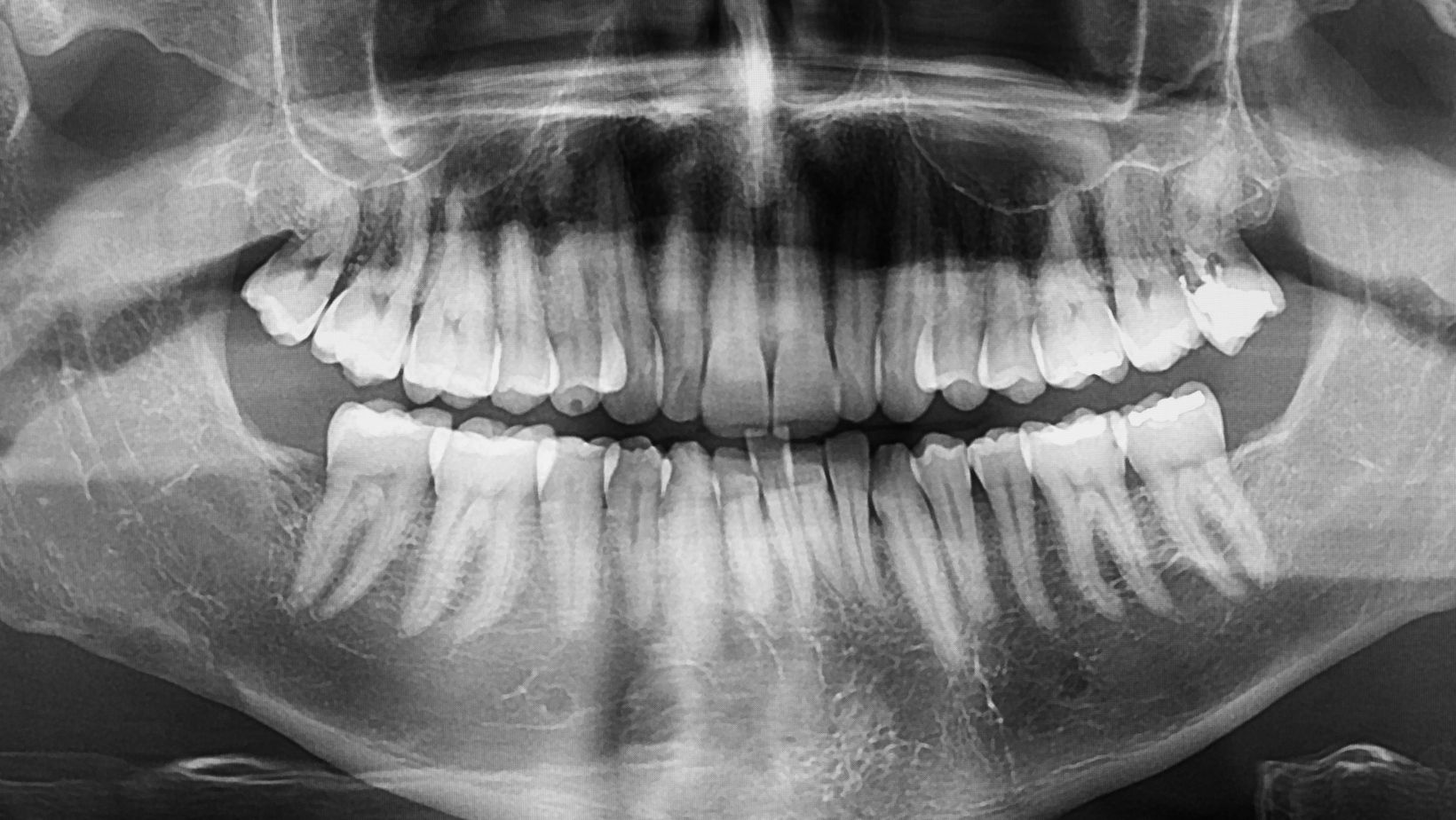
If you need a permanent way to replace a full set of teeth, All-on-4 and All-on-X implants both give strong, long-lasting solutions—but they differ in implant count, flexibility, and how they fit your jaw and budget.
All-on-4 dental implants uses four implants per arch with a more standardized method, while All-on-X lets your dentist use more implants when needed for extra support or better long-term stability.
You’ll explore what each option involves, how their clinical outcomes compare, and what to expect for cost and recovery so you can pick the best path for your mouth and lifestyle.
What Are All-on-4 and All-on-X Implants?
These treatments replace a full upper or lower row of teeth using a small set of implants to hold a fixed prosthesis. They differ mainly in how many implants are used and how that number adapts to your needs, bone, and budget.
Overview of Full-Arch Dental Implants
Full-arch dental implants restore an entire dental arch (upper or lower) with a fixed bridge anchored to implants in the jawbone. You get a prosthetic that looks and functions like natural teeth, stays in place, and helps preserve jawbone by transferring chewing forces to bone. Recovery times vary, but many patients receive a temporary prosthesis the same day as implant placement.
Key benefits for you:
- Fixed, non-removable prosthesis
- Better chewing and speech than removable dentures
- Bone preservation and facial support
Risks and needs include careful planning, possible CT scans, and healthy gums and bone or bone grafting if needed.
Design Principles of All-on-4
All-on-4 uses four implants to support a full-arch prosthesis. Two implants are placed near the front of the jaw straight up, and two are placed toward the back at an angle. The angled back implants let the surgeon use available bone and avoid anatomical structures like the sinus or nerve.
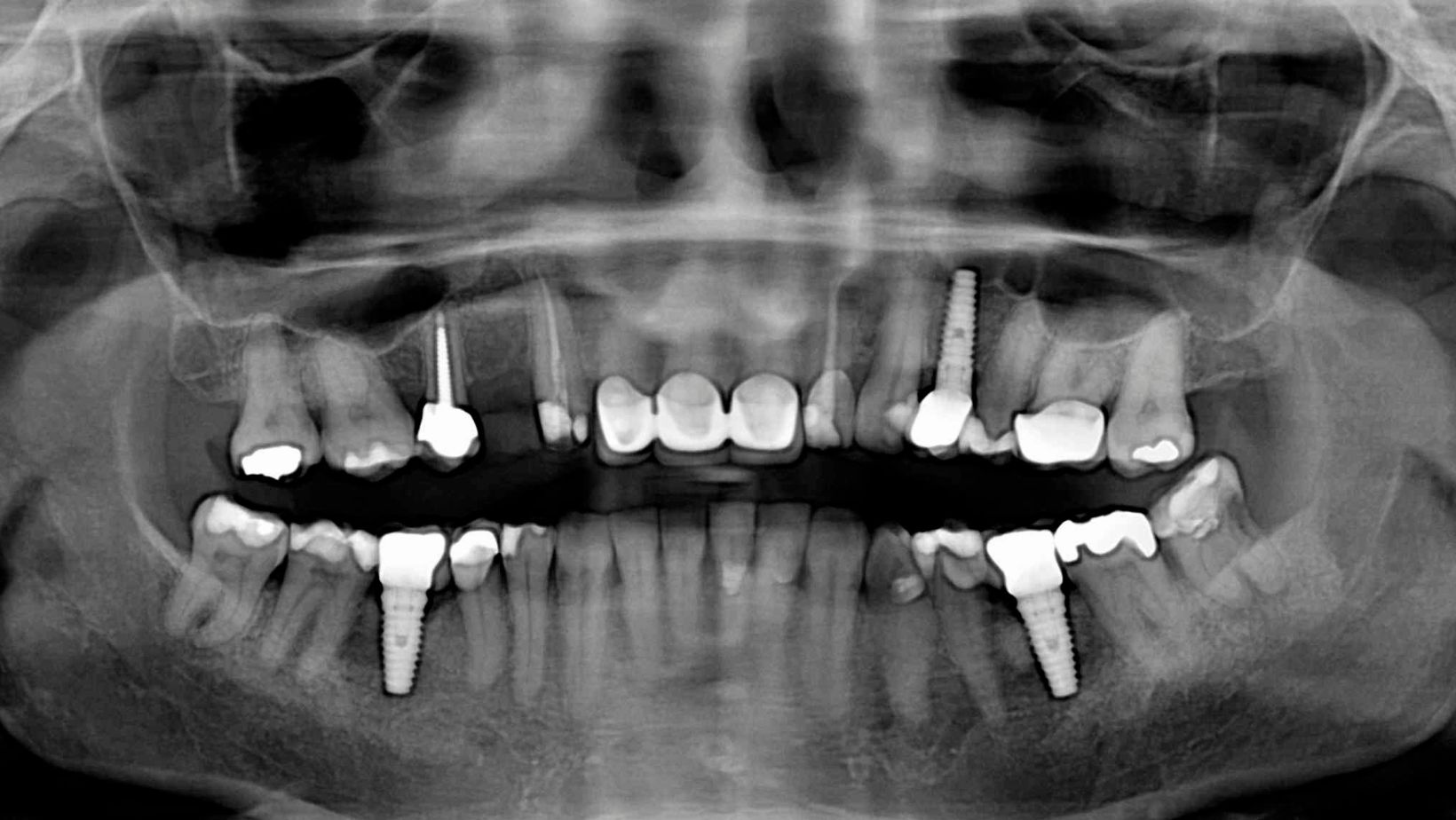
What this means for you:
- Fewer implants lower cost and shorten surgery time
- Often avoids bone grafts, so you may get teeth sooner
- Standardized approach with predictable steps and same-day temporary teeth
All-on-4 suits many patients who lack enough bone in the back jaw but still want a fixed bridge.
Concept Behind All-on-X
All-on-X takes the same full-arch idea but varies the implant count: All-on-4, All-on-5, All-on-6, or more, based on your jaw anatomy and clinical goals. The “X” lets your dentist choose the number and position of implants to improve stability, load distribution, and long-term support.
How this affects your care:
- More implants can spread bite forces better and may increase long-term durability
- Custom planning allows implants where bone is best, which can reduce the need for angled placement
- Cost and surgical time can increase with more implants, and you may need healing time before the final prosthesis
Your dentist will evaluate bone, bite force, and budget to recommend the optimal implant count and layout.
Key Differences Between All-on-4 and All-on-X
These options both restore a full arch, but they differ in how implants are placed, how many implants are used, and how flexible the treatment can be. Knowing these specifics helps you pick the right approach for your jaw shape, bone level, and budget.
Implant Placement Strategies
All-on-4 places two implants near the front of the jaw and two near the back that are often angled to avoid sinuses or weak bone. Angled posterior implants let your dentist use existing bone and often avoid grafting. That strategy shortens surgery and recovery for many patients.
All-on-X lets your clinician choose implant locations freely and may use tilted or vertical implants as needed. You can expect more planning time because the team will map your jaw with scans and place implants to match your bone volume and prosthetic needs. This approach can improve load distribution and long-term support when bone or shape is unusual.
Number of Implants Used
All-on-4 uses exactly four implants per arch. Four implants are usually enough for a stable, fixed bridge when bone is adequate and well-placed implants are possible. Fewer implants can lower cost and shorten treatment, but might increase stress on each implant.
All-on-X allows any number of implants—commonly 4, 6, or more—based on your bone and bite forces. More implants spread chewing forces and can reduce strain on individual fixtures. Your clinician may recommend extra implants if you grind teeth, have low bone density, or want a stronger long-term solution.
Flexibility of Treatment Options
All-on-4 follows a standardized protocol with predictable timing and often immediate teeth the same day. That standardization makes treatment more streamlined and easier to quote or schedule. However, it can limit placement changes if your anatomy is unusual.
All-on-X offers higher customization for prosthetic design, implant number, and placement. You gain options like using zygomatic implants, staging the surgery, or planning for denser support in heavy chewers. That flexibility can increase cost and planning time but gives you a tailored result when standard placement won’t work.
Clinical Outcomes and Considerations
You will learn how long these treatments last, which patients fit each option, and how jaw bone affects success. Focus on implant survival, prosthesis complications, and bone needs when you decide.
Long-Term Success Rates
Studies report high implant survival for both systems, often above 90% at 5–10 years for well-planned cases. The All-on-4 concept has large datasets showing reliable implant survival, especially when clinicians use proper implant angulation and occlusal design.
Prosthetic complications occur more often than implant loss. Expect issues like acrylic tooth wear, screw loosening, or veneer fracture over time. You may need maintenance visits every 6–12 months and occasional repairs or component replacements.
When more implants are placed (All-on-X with 6 or more), prosthetic load spreads out and may reduce mechanical complications. However, clinician skill, hygiene, and regular follow-up matter more than implant count alone.
Candidacy for Each System
You qualify for All-on-4 if you have moderate jaw bone volume and want fewer implants with a shorter treatment time. All-on-4 often uses two anterior vertical implants and two tilted posterior implants to avoid sinuses or nerves, so it suits many who wish to skip bone grafts.
All-on-X fits you if you have greater bone loss or want higher prosthetic support and redundancy. Adding implants (All-on-6 or more) gives more stability and backup if one implant fails, but it typically needs more surgery and higher cost.
Medical factors also guide choice. You may not be a good candidate if you smoke heavily, have uncontrolled diabetes, or poor oral hygiene. Your surgeon will evaluate medical history, scans, and bite forces before recommending a system.
Bone Health and Jaw Structure Factors
Jaw bone quality and quantity directly affect implant placement and long-term success. Dense anterior bone often allows immediate loading with All-on-4, while thin posterior bone may require grafting or sinus lift if you want more posterior implants.
Tilted posterior implants in All-on-4 avoid anatomical limits but reduce the implant’s vertical bone contact. That works if you have good anterior bone and controlled bite forces. If your jaw shape or bone resorption is severe, adding implants (All-on-X) or doing bone augmentation may be safer.
Cone-beam CT scans guide decisions. Your clinician will measure bone height, width, and density and plan implant number, position, and angulation to minimize risk and maximize prosthetic support.
Cost, Recovery, and Patient Experience
You will face differences in price, healing time, and daily care between All-on-4 and All-on-X. Costs vary by implant count, materials, and whether bone grafting or temporary teeth are needed. Recovery depends on surgery extent and your health.
Comparative Costs and Value
All-on-4 usually costs less than All-on-X because it uses four implants per arch. Expect prices to range widely by region and clinic; ask for an itemized quote that lists surgery, prosthesis, imaging, and follow-up visits.
All-on-X often uses more implants (5–6+), raising implant and lab costs. That can increase upfront expense but may add stability for some patients.
Consider value, not just price: compare warranty terms, material quality (acrylic vs. zirconia), and whether the prosthesis is fixed or removable. Also check if temporary prostheses are included and whether bone grafts are likely—those add thousands to the final bill.
Recovery Process and Healing Time
You will usually get same-day temporary teeth with either approach, but healing differs by how many implants and whether grafting is done. Expect soft-tissue healing in 1–2 weeks and bone integration (osseointegration) to take 3–6 months.
Pain and swelling peak in the first 48–72 hours; your dentist will prescribe pain control and antibiotics if needed. Stick to soft foods for 2–4 weeks and avoid heavy biting until your clinician clears you.
If you need bone grafting, plan for longer recovery and possibly a staged implant timeline. Follow-up visits every few weeks initially help monitor healing and adjust your temporary prosthesis.
Maintenance and Longevity
You must clean under fixed full-arch bridges with a water flosser, interdental brushes, and regular brushing. Your dental team will show you the exact technique for your prosthesis type.
All-on-4 and All-on-X prostheses can last many years, but parts may need repair or replacement. Implant fixtures often last decades with good care; prosthetic teeth may wear or fracture and typically need replacement every 5–15 years depending on material.
Schedule professional check-ups and cleanings every 3–6 months initially, then as advised. Smoking, uncontrolled diabetes, and poor oral hygiene raise the risk of implant failure.

Bob Duncan is the lead writer and partner on ConversationsWithBianca.com. A passionate parent, he’s always excited to dive into the conversation about anything from parenting, food & drink, travel, to gifts & more!