
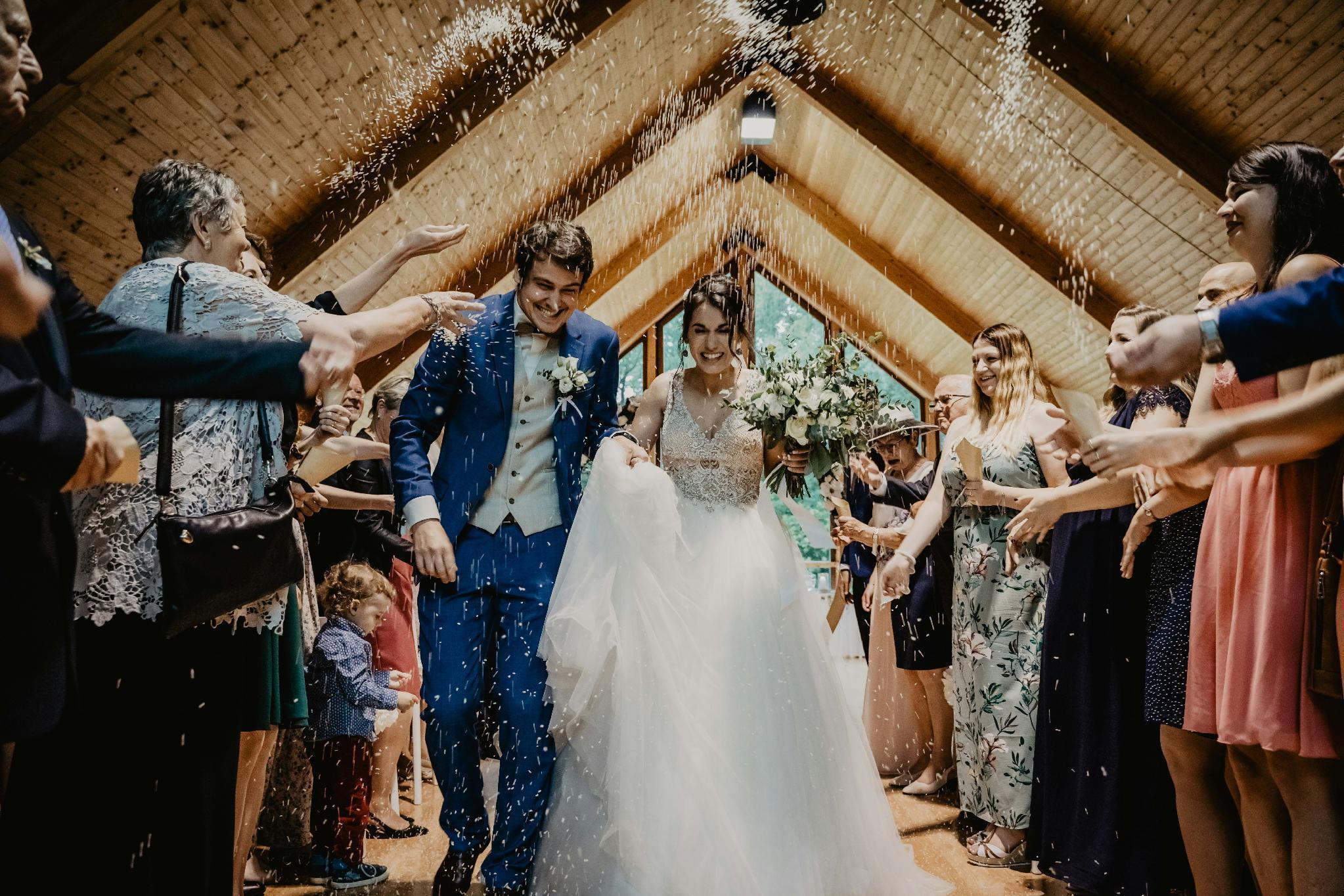
When my best friend Sarah got married last spring, she did something I’d never seen at a wedding before and now I tell every bride-to-be about it.
She didn’t scatter disposable cameras across the tables. She didn’t ask guests to upload to some clunky shared Dropbox folder no one would remember to open. She didn’t print out a hashtag and hope half the room would tag her properly.
Instead, on every table sat a small printed card with a QR code. Guests scanned it, and within seconds they were uploading their phone candids — the blurry dance floor shots, the unscripted moments her photographer was nowhere near straight into one shared album. By the end of the night, Sarah had over 400 photos from her guests’ phones alone.
Real ones. The kind you can’t pose for
I’d been to a dozen weddings before hers where the couple waited three weeks for the official gallery and then quietly groaned about how few candid moments made it in. Not Sarah. While we were eating brunch the next morning, she was already scrolling through hundreds of photos her guests had shot the night before.
I asked her how she pulled it off. She told me she’d set up a qr code wedding photo sharing system and honestly, I think it’s one of the smartest small choices any couple can make.
Why this beats every other photo-sharing idea
I’ve watched couples try every solution. Hashtags. Dropbox folders. Disposable cameras. A friend’s iCloud link that everyone immediately lost. They all have the same fatal flaw: they ask your guests to remember something on the most distracting night of their year. QR codes flip it. There’s nothing to remember. Hold up your phone, the camera reads the code, tap the link, upload. No app to download. No account to create. No hashtag to misspell. If you’ve ever scanned a menu at a restaurant, you already know how to do it.
And here’s the part that sold Sarah: she ended up with photos from people she didn’t even know were taking them. Her grandfather’s wide-angle shot of the ceremony from the back row. Her cousin’s video of the flower girl falling asleep at the head table. Her maid of honor’s photo of the groom crying when he saw Sarah walk down the aisle — taken from the front pew, a perspective her hired photographer physically couldn’t have had.
What actually goes on the card
This was the part I overthought when I imagined doing it for my own wedding someday. I pictured some elaborate signage moment. Sarah said it took her about ten minutes to mock up a card in Canva. The whole thing was a 4-inch square QR code in the middle and one line of text underneath:
▎ Snap, scan, share. Help us capture every moment of our day.
She printed one for every table. A few leaned against the centerpieces, a few tucked into the menu cards. People scanned them all night.
The morning-after part nobody tells you about
The day after the wedding, Sarah and her husband sat in their hotel room with coffee and scrolled through hundreds of photos they would never otherwise have had. She told me half of them weren’t “good” in the technical sense wrong lighting, weird crops, motion blur from the dance floor. But every single one was a real moment.
Her photographer’s gallery came back three weeks later, polished and beautiful and exactly what you pay a wedding photographer for. But the gallery she said she’d already cried over twice was the guest one because it was full of people who loved her, looking at her, on a night she’d already started to forget the small details of.
If you’re getting married or your best friend is
Do this. Or send this to whoever in your life is currently knee-deep in a wedding spreadsheet. It costs almost nothing compared to literally everything else on a wedding budget, takes ten minutes to set up, and gives you something no amount of professional photography can ever fully replicate: the wedding as your guests actually lived it.
The official photos go in a frame on the mantle. But the guest photos? Those are the ones you’ll find yourself scrolling through at midnight five years later, when you can’t sleep and you want to remember what it actually felt like.