
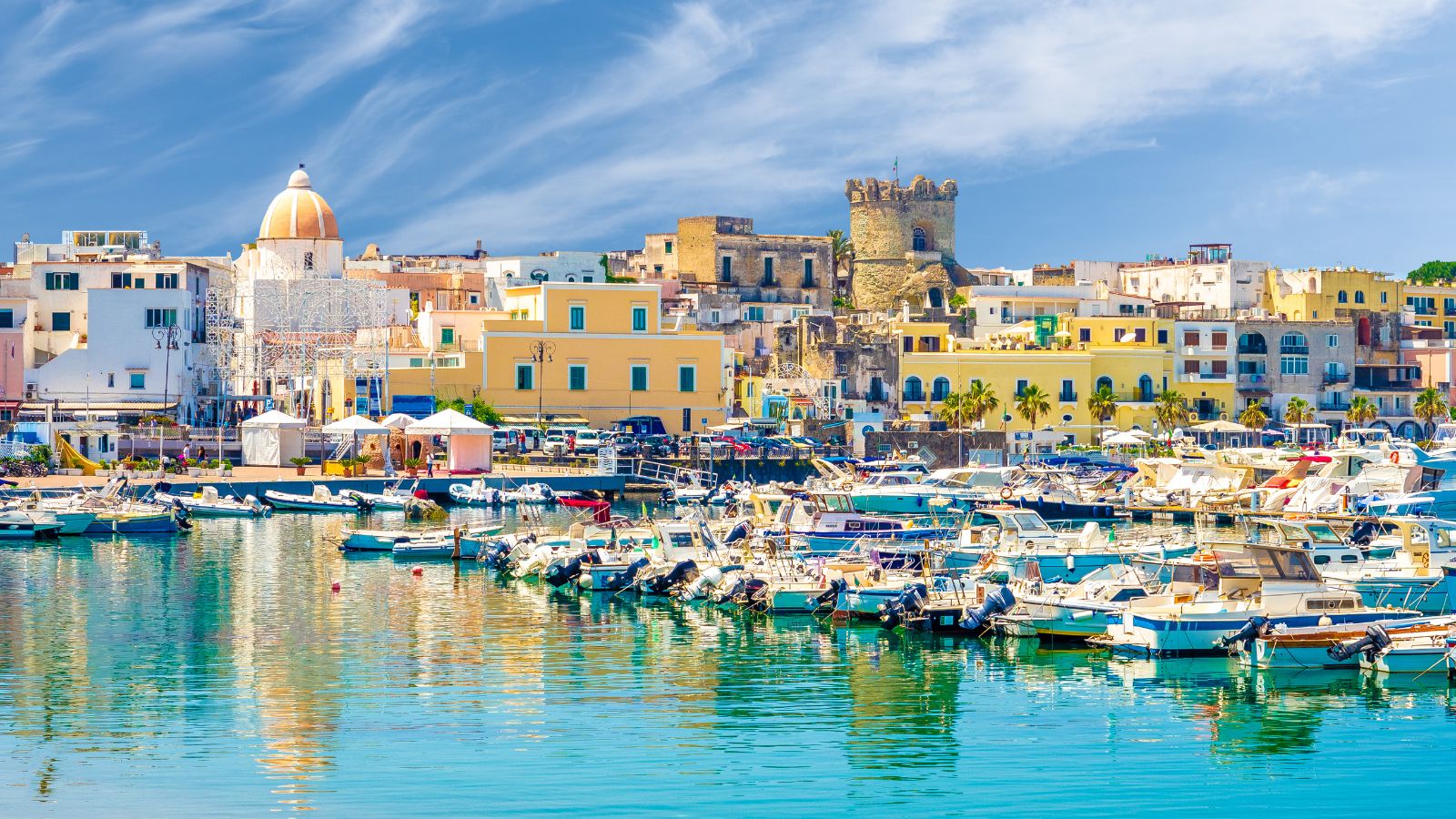
There are destinations that seem designed to be consumed quickly, almost as if their value depended on how many places you can tick off a map. Ischia works differently. The island, located in the Bay of Naples, introduces a pause that is not always immediately apparent. Those who arrive seeking only beaches or Mediterranean landscapes soon discover that the real axis of the place lies elsewhere: a constant relationship between body, time, and environment. Here, the journey does not move in a straight line. It stops, retreats, disperses. And within that irregular movement, something emerges—difficult to define, yet unmistakable when it happens.
Thermal Waters And A Tradition That Doesn’t Show Off
Ischia is crossed by a network of thermal springs that have shaped its identity for centuries. This is not a recent attraction or a product of modern tourism. The mineral-rich waters are part of everyday life, integrated into historic thermal spas, but also into open spaces where access remains simple.
Walking through areas such as Sorgeto or the island’s thermal parks, one senses a continuity between the natural and the built environment. There is no clear boundary. Visitors come into contact with this system almost without realizing it, as if drawn by a logic that existed long before their arrival.
In this context, staying in places like this hotel in Ischia allows you to position yourself within that balance without forcing it. More than a strategic choice, it becomes a way of remaining close to what truly defines the experience.
Beaches That Shift With The Hour
The beaches of Ischia do not conform to a single image. Some, like Maronti, stretch into long expanses where the wind reshapes the landscape throughout the day. Others, more secluded, seem designed to disappear at certain moments and reappear under a different light.
The sand, often of volcanic origin, adds a distinct texture to the surroundings. It is not a minor detail. Walking barefoot here creates a sensation that feels unusual, as if the ground itself retained a kind of thermal memory.
As the afternoon progresses, the color of the sea changes with a speed that surprises even those who have spent several days on the island. It is at that moment that the perception of the place begins to shift slightly.
Villages That Resist Uniformity
Forio, Ischia Porto, Sant’Angelo. These names recur in guides and recommendations, yet the experience in each of these urban centers depends largely on the moment in which they are explored.
Tourism coexists with a local structure that has not disappeared. Small shops, markets, conversations in squares that do not seek external attention. The island does not fully reorganize itself around the visitor.
This coexistence creates a particular feeling: you can become part of the environment without occupying its center. Walking without a defined direction, pausing in side streets, observing how the rhythm changes throughout the day. Simple gestures that, in Ischia, take on a different weight.
Gastronomy Rooted In The Land
The local cuisine maintains a direct relationship with the landscape. Ischian-style rabbit, seafood, wines cultivated on volcanic soils. Each element seems to follow a logic of proximity that requires no explanation.
In many restaurants, far from the busiest areas, the menu does not seek to impress through artifice. It simply follows a continuity that already exists in the surroundings. This coherence is perceived in the flavors, but also in the way dishes are served—without unnecessary interruptions.
There is a certain resistance to turning gastronomy into spectacle. And perhaps for that reason, when something unexpected appears, it becomes harder to forget.
Trails And Viewpoints Beyond Quick Maps
Beyond the coast, the island’s interior offers paths that cross less visible areas. Mount Epomeo, the highest point of Ischia, allows visitors to observe the territory from a perspective that reshapes its meaning.
The ascent is not particularly difficult, but it requires time. And in this case, that time becomes part of the journey itself. As you gain elevation, the sound of the sea fades, and the landscape fragments into layers that are not visible from below.
From the summit, the island no longer appears as a compact destination. It becomes a sum of spaces that do not entirely fit together. And that lack of perfect alignment, far from being a flaw, introduces a subtle tension that accompanies the traveler even on the way down.
Ischia does not reveal itself immediately. It works through accumulation, through small shifts that force you to look twice at the same place. And just when everything seems to make sense, a minimal variation—light, sound, distance—emerges, quietly moving the experience somewhere else.

Bob Duncan is the lead writer and partner on ConversationsWithBianca.com. A passionate parent, he’s always excited to dive into the conversation about anything from parenting, food & drink, travel, to gifts & more!